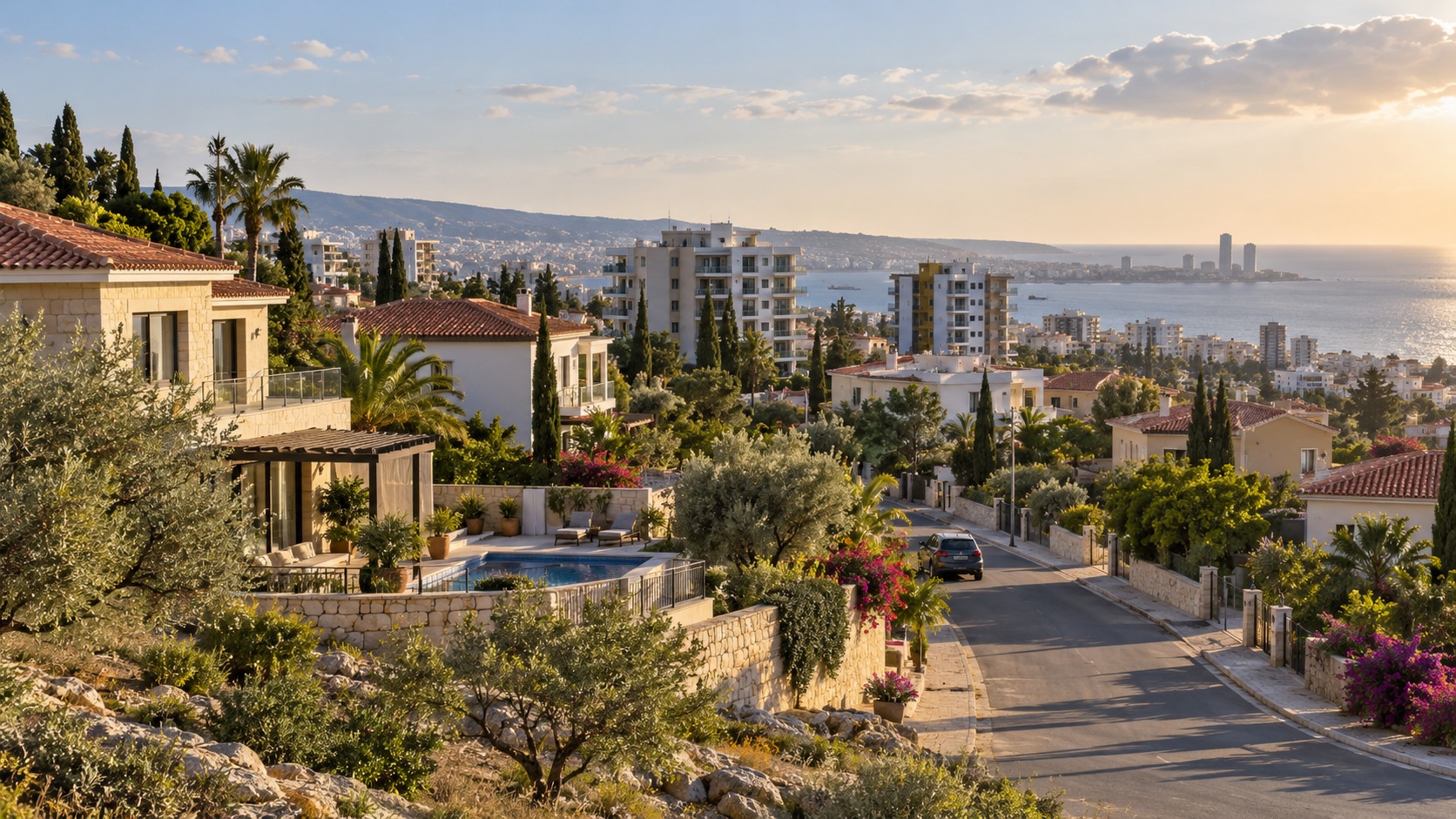
Cyprus now sits at the top of the EU table for under-occupied homes. Eurostat-based figures reported on 21 September show that 69.4% of the population lived in homes with more rooms than their households formally needed in 2025, more than double the EU average. At first glance, that sounds like a country with plenty of spare housing capacity. In practice, it says more about the structure of the housing stock than about market availability.
Under-occupied does not mean empty. In Cyprus, it often reflects owner-occupied houses, larger family homes and a longstanding preference for lower-density living. That helps explain why overall overcrowding is very low, at about 2.2%, and why rural overcrowding was just 0.7%. But the same data also show a more stressed segment: among people renting at market prices, 8.3% lived in overcrowded accommodation. In other words, the households most exposed to active market conditions face a tighter reality than the national average suggests.
For buyers, landlords and policymakers, the practical lesson is that housing pressure in Cyprus is increasingly about mismatch. Space exists, but not always in the right tenure, location or unit type. A market full of larger owner-held homes can still coexist with shortages of affordable apartments in employment centres, university areas and coastal districts where demand remains concentrated.
Related Estate Briefing coverage: Cyprus property demand, supply and tourism split in 2026 · Cyprus new-home districts diverged in H1 2026 · Cyprus tourist arrivals and holiday-rental demand in 2026
Sources and limits
Cyprus Mail ↗
Strong business/property media based on Eurostat data · 2026-09-21
Cyprus Mail ↗
Strong business/property media based on Eurostat data · 2025-12-23

Eurostat ↗
Official EU statistics and background · 2025-12-23
Estate Briefing ↗
Existing coverage · 2026-09-19
This is research, not investment, tax or legal advice. Definitions and observation dates remain attached to every claim.