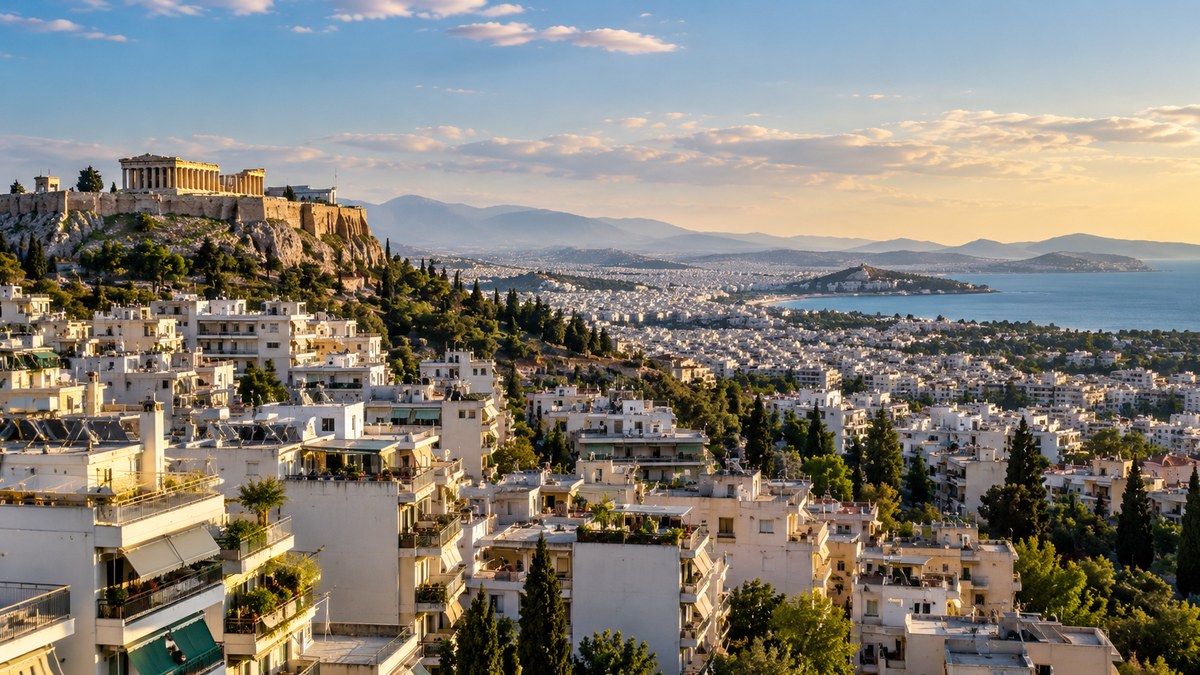
Greek housing has not stopped getting more expensive. It has, however, moved into a slower phase.
The Bank of Greece estimates that apartment prices rose 5.5% year on year in the second quarter of 2026. That is still a meaningful increase, but it is well below the revised 8.3% average rise recorded in 2025 and the 9.1% increase in 2024.
New apartments continued to outperform older stock. Prices for homes up to five years old increased 6.2%, compared with 5.0% for older apartments. The gap suggests buyers are still willing to pay a premium for newer, more energy-efficient stock even as the broader market loses speed.
The regional picture is more revealing. Athens apartment prices increased 5.0% and Thessaloniki 4.7%. Other cities recorded 5.4%, while the rest of Greece led with 7.1%. In 2025, Thessaloniki and other major cities had been among the fastest-growing parts of the market.
That rotation matters. It suggests the next phase of Greece’s housing cycle may be less about the two headline cities and more about regional markets where tourism, second-home demand and a lower starting price can still support stronger growth.
For buyers, the key message is not that prices are falling—they are not. It is that the market is becoming more selective. A national average now hides a widening difference between locations and between new and older homes.
Sources and limits
Bank of Greece ↗
Official central bank statistics · 2026-09-15
This is research, not investment, tax or legal advice. Definitions and observation dates remain attached to every claim.