
The International Monetary Fund has put foreign-currency mortgages back on Georgia’s financial-risk agenda. In a official mission statement published on 13 November, staff concluding a visit to Tbilisi said that dollarisation remains an important vulnerability and that the recent increase in foreign-currency lending, including mortgages, warrants close monitoring. This is a risk assessment by a visiting IMF team, not a new restriction imposed on banks or homebuyers.
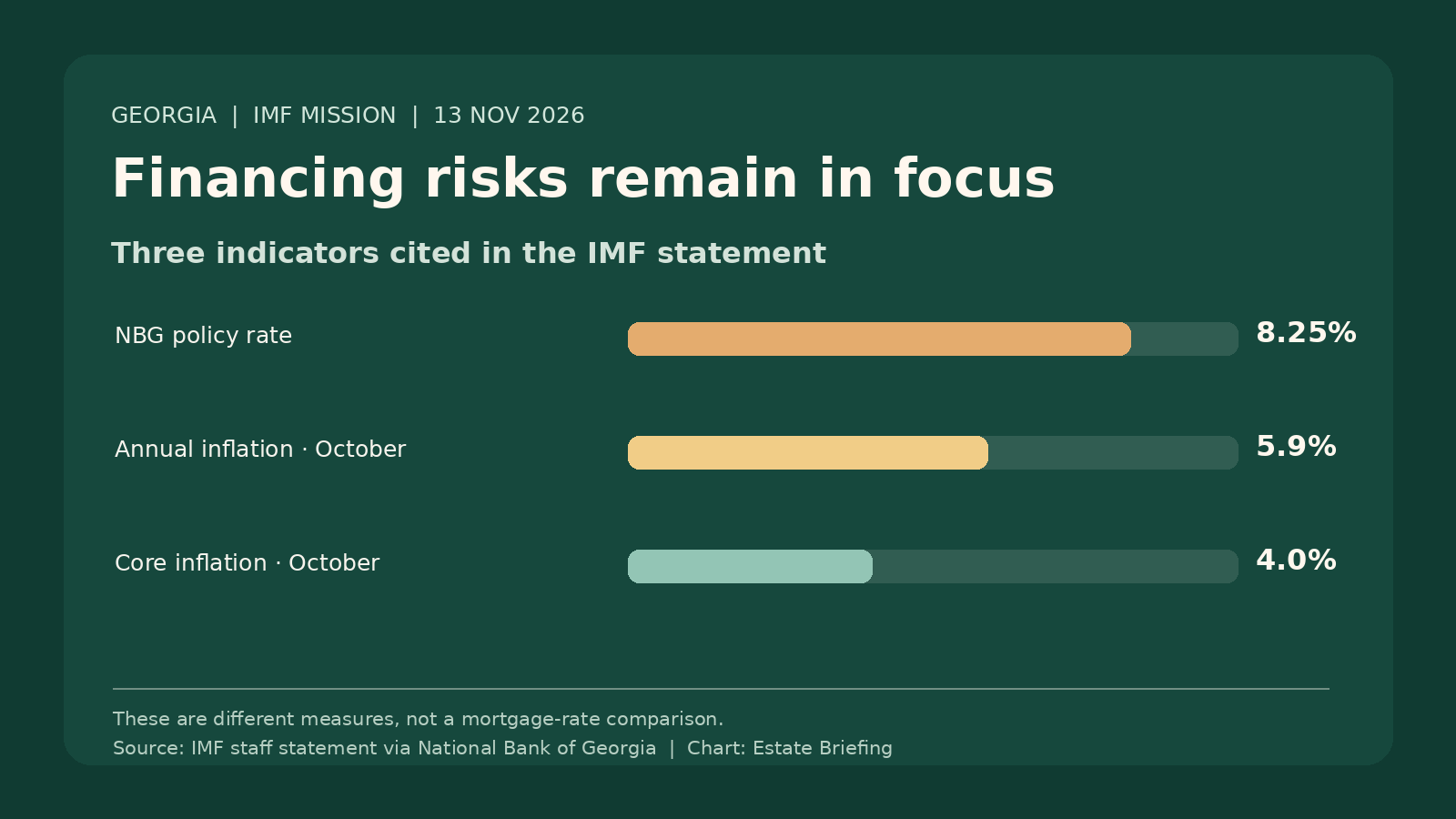
The same statement described inflation as more persistent than previously expected. Annual consumer-price inflation reached 5.9% in October 2026, compared with the National Bank of Georgia’s 3% target; core inflation was 4.0%. The central bank had raised its policy rate in May and subsequently held it at 8.25%. IMF staff said that a tighter monetary-policy stance might be necessary if inflation pressures persist. The statement did not announce another rate increase or specify when borrowing costs would change.
For a household earning mainly in lari, a mortgage denominated in another currency introduces an exposure that cannot be judged from the advertised interest rate alone. A weaker lari can raise the local-currency cost of the same foreign-currency repayment. Conversely, a borrower whose income and debt are in the same currency faces a different risk profile. Actual affordability depends on contractual rates, repricing clauses, income stability, loan duration and the lender’s stress tests; the IMF published no household-level affordability estimates in this mission statement.
Buyers should also separate the cost of a mortgage from the price of property. An increase in the policy rate does not mechanically change the asking price of a new apartment, the final transaction price or rental income. Higher financing costs can affect demand and cash flow, but their impact varies with the share of cash buyers, construction stage and local supply. The IMF noted that investment in large real-estate projects could support economic activity, while wider geopolitical and domestic uncertainties remain relevant to the outlook.
For a practical comparison, request written offers in the actual borrowing currency and calculate repayments under several exchange-rate and interest-rate scenarios. Check whether the purchase budget also covers finishing, service charges and periods without rental income. For context on the different kinds of apartments and project-level due diligence in Batumi, HomeRadar’s Batumi market guide offers a market guide; it is not an official mortgage dataset. The IMF’s warning is a reason to test a financing plan, not a forecast of a housing-price fall.
Sources and limits

IMF ↗
Official IMF mission statement · 2026-11-13
This is research, not investment, tax or legal advice. Definitions and observation dates remain attached to every claim.
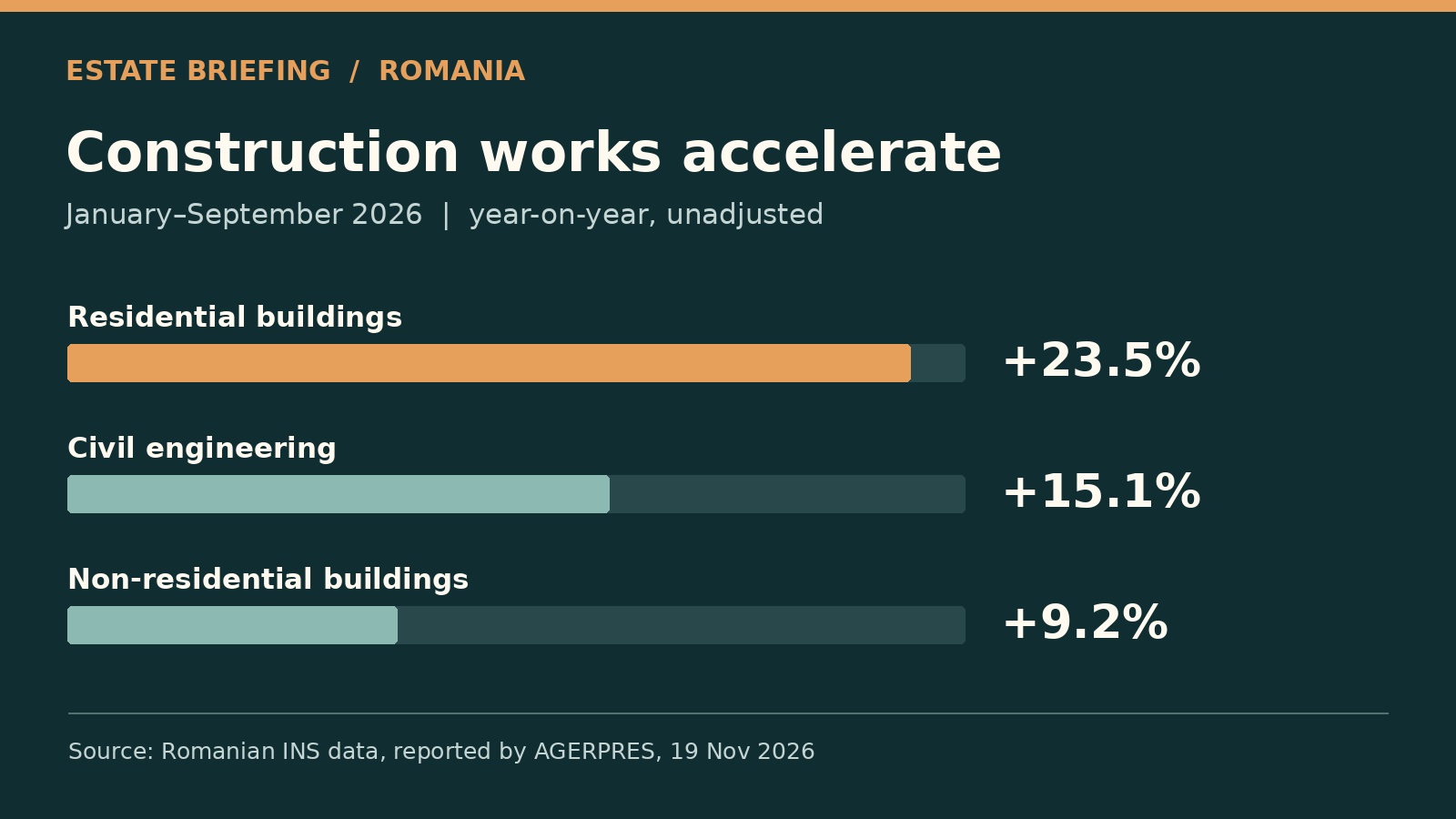 Romania · Romanian residential construction rises 23.5% in nine months
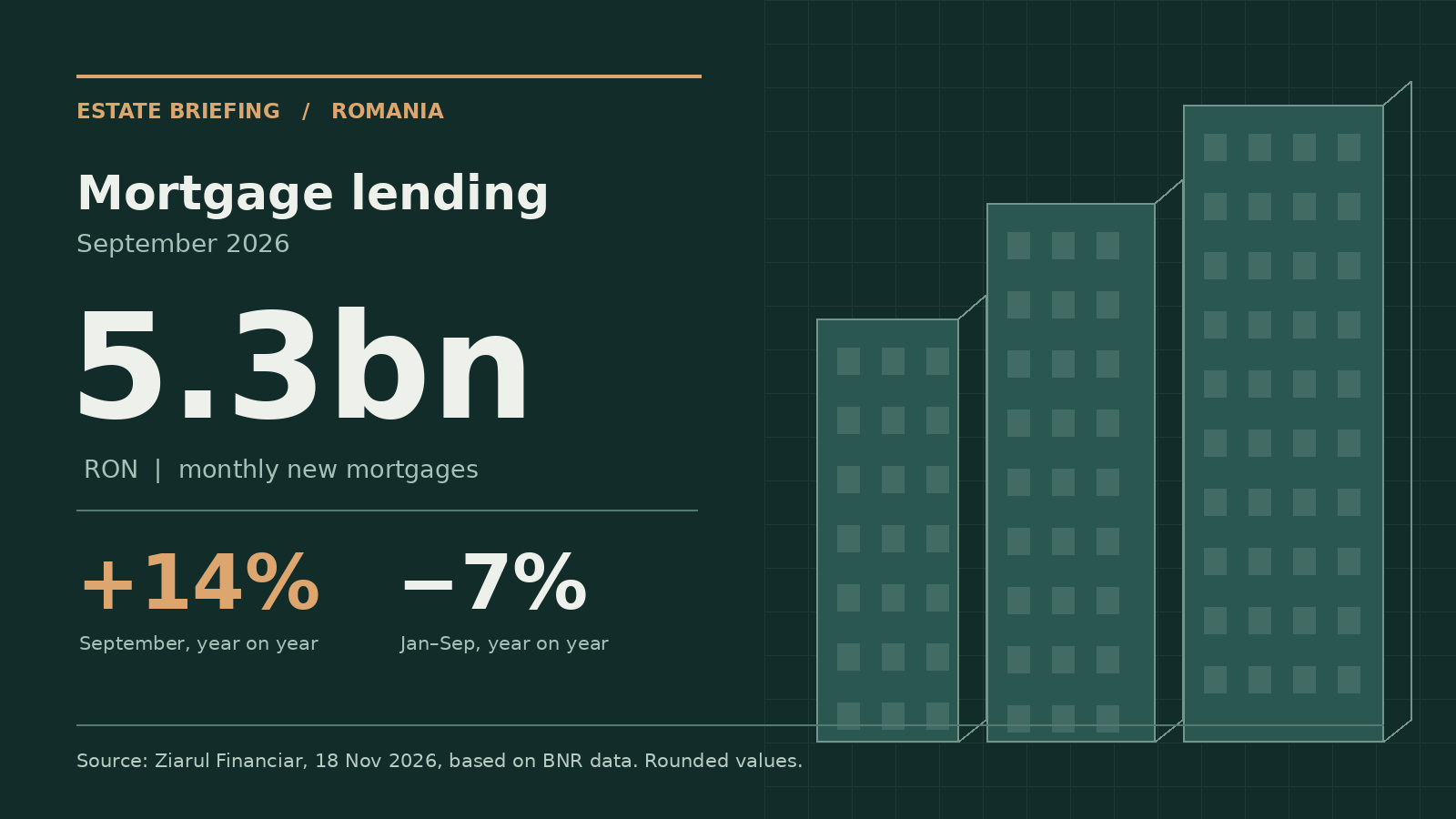 Romania · Romania’s September mortgage lending reaches a record
 Greece · Intrum estimate puts nearly 15,000 Greek homes with banks and loan servicers