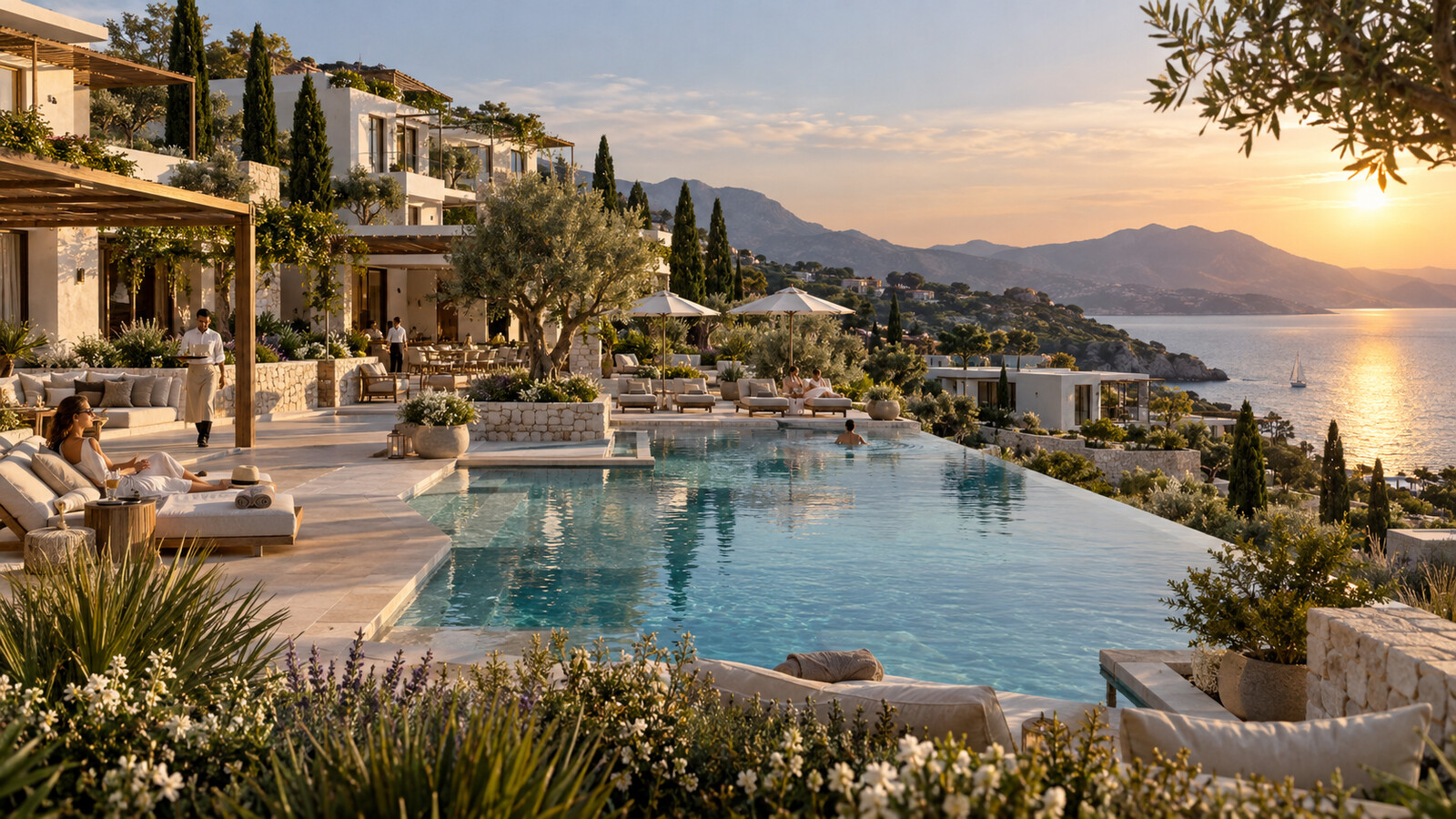
The branded residence market is moving from a niche urban product into a global resort category. Knight Frank assessed more than 200 brands and nearly 1,800 live and planned schemes across 90 countries. Operational projects almost tripled from 354 in 2015 to 903 at the end of 2025, and the firm projects more than 1,000 by the end of 2026.
Location is changing with scale. Fewer than four in ten schemes were outside major cities in 2016; today more than half are in coastal, island or mountain destinations. Hotel operators still account for about 70% of operating schemes, but only 60% once the pipeline is included, as fashion, automotive and lifestyle brands enter the sector.
This trend is directly relevant to Batumi, Cyprus, the Greek coast and Bulgaria's Black Sea resorts. It expands the addressable luxury market, but it also raises the standard. A logo alone does not guarantee demand. Buyers need to see who operates the property, which services are contractually delivered, how fees are controlled and whether the design genuinely supports hospitality-level use.
Knight Frank points to Porto Heli in Greece as an example of a less-developed resort destination attracting branded villas. The wider lesson is that the next premium may come from location plus operations, not from urban scarcity. For investors, the safest comparison is the total ownership cost and achievable rental performance against an equivalent unbranded property.
Sources and limits
Knight Frank ↗
Institutional research · 2026-09-14
Knight Frank ↗
Institutional research · 2026-09-09
Knight Frank ↗
Institutional research · 2026-09-09
This is research, not investment, tax or legal advice. Definitions and observation dates remain attached to every claim.