
According to BM.GE, which examined the first version of Tbilisi’s 2027 municipal budget proposal on 20 November, three programmes dealing with unsafe residential buildings would receive a combined GEL 32 million. That is 53.5% less than the GEL 68.89 million included in the 2026 planned budget. These are budget allocations, not completed construction expenditure or an approved final decision. The city council may change the figures during consideration. BM.GE
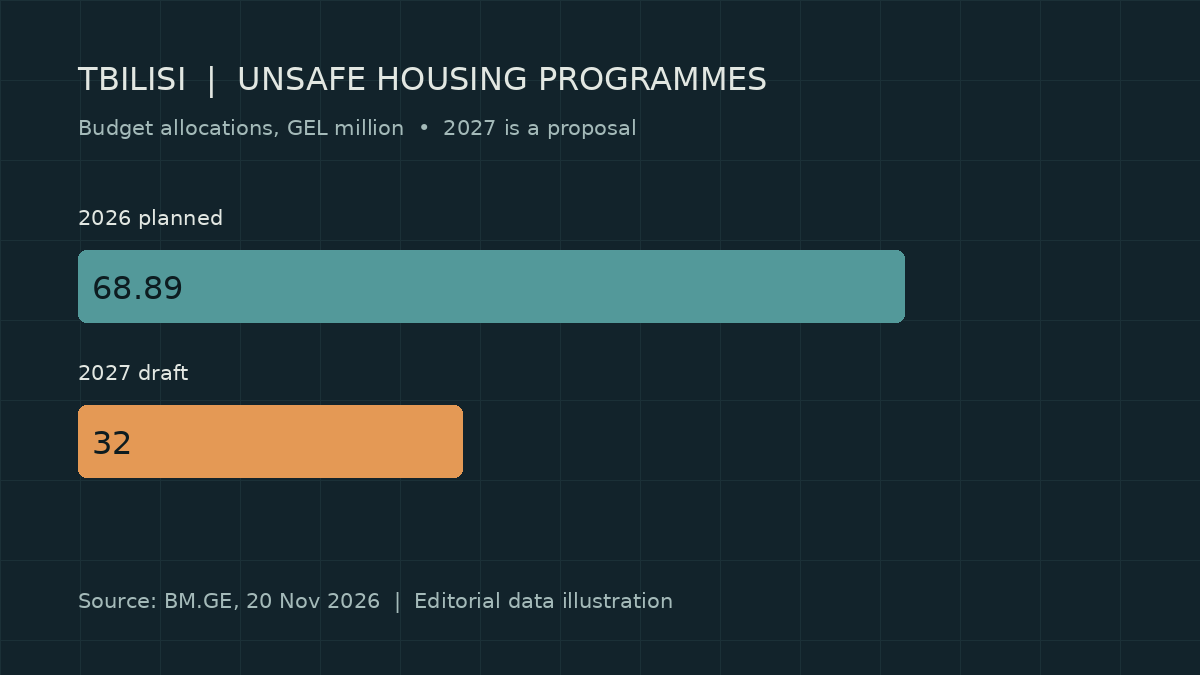
The largest proposed allocation, GEL 20 million, would go to replacing unsafe apartment blocks, compared with GEL 37.95 million in the 2026 plan. A further GEL 7 million would fund housing construction and structural reinforcement, compared with GEL 20.94 million. The draft sets aside GEL 5 million for acquiring unsafe buildings in heritage protection areas, down from GEL 10 million. The explanatory material envisages continuing construction on seven replacement blocks and strengthening roughly twenty buildings.
The practical question for residents is not only how much the municipality allocates but how individual projects progress, including temporary accommodation and delivery schedules. BM.GE reports that the replacement programme provides rental accommodation during construction and new renovated space at the original location after completion. The article is a reading of a proposal, not evidence that any specific building has been cancelled. For broader context on Georgian residential developments, see homeradar.ge; its listings are not the source of these budget figures. HomeRadar
Sources and limits

BM.GE ↗
Business reporting · 2026-11-20
This is research, not investment, tax or legal advice. Definitions and observation dates remain attached to every claim.
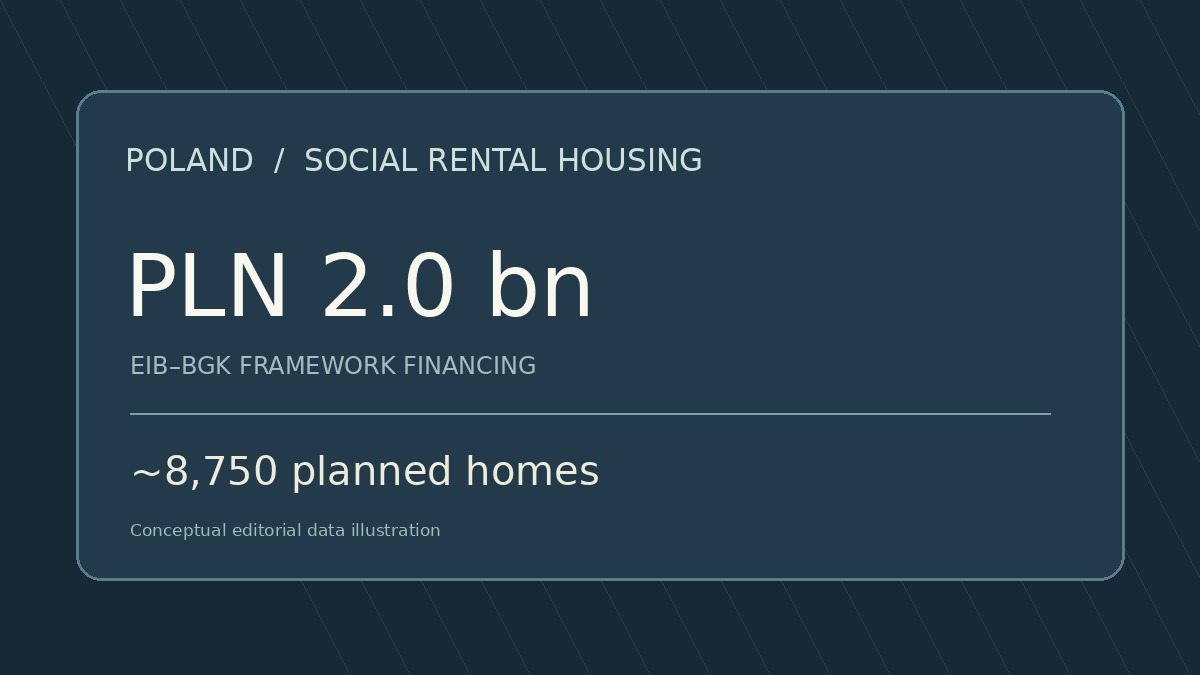 Poland · Poland secures PLN 2bn EIB housing framework
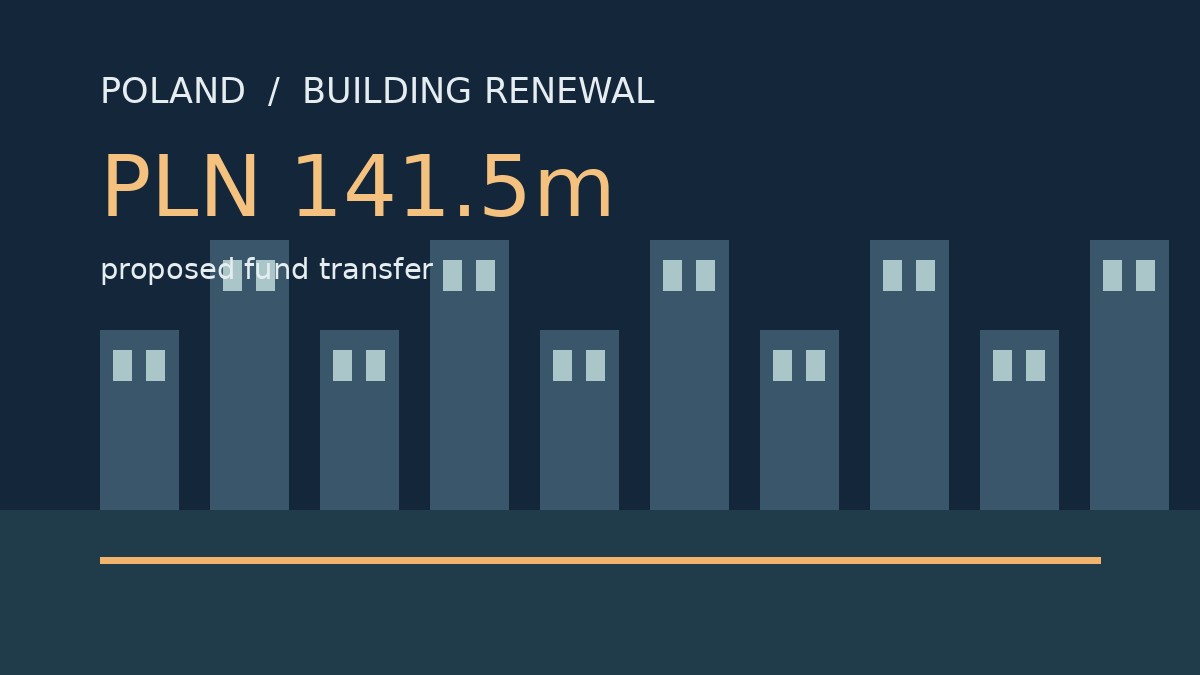 Poland · Poland moves building-renovation funding bill to president
 Poland · Polish mortgage borrowers are changing homes more than once