
A developer listing is a statement about what is being marketed, not a deed. In an October comparison of 41 projects run by 13 developers in Batumi and nearby resort areas, homeradar.ge observed available catalogue entries rise from 3,573 on 11 October to 3,598 on 28 October. The net increase was 25 entries, or about 0.7%. During the same interval, 58 previously tracked entries acquired a sold label. These numbers are not contradictory, but neither one is an official sales statistic.

The explanation lies in movement between statuses. Of entries initially available, 14 were subsequently marked sold, 27 reserved and 29 temporarily unavailable. Conversely, 88 previously unavailable entries returned to the available list and seven new IDs appeared as available. That arithmetic produces the 25-entry increase. The larger group of 58 newly sold-labelled records includes items previously reserved or locked, so adding 58 to the 14 would count some transitions twice.
For buyers, the denominator is as important as the change. Catalogue records may represent an identifiable apartment, a sample layout, parking or commercial space. A developer can also temporarily withhold an apartment or reintroduce it. At Metropol Cube, for example, homeradar.ge’s separate comparison reports seven reservations and one return, which explains a decline in available records without a direct available-to-sold transition. Metropol’s own website confirms that Cube and Oval are active marketed developments, but does not certify homeradar.ge’s historical status counts.
A completed property sale requires different evidence. Georgia’s National Agency of Public Registry offers extracts and registration services, while a developer website supplies marketing availability. Neither an online sold badge nor a reservation proves the transfer date, contract value or registered buyer. Investors assessing demand should therefore track identical apartment IDs over several periods, ask developers for dated written offers and keep registered transactions separate from inventory changes.
The practical conclusion is not that Batumi demand strengthened or weakened in October. It is that a simple available-stock chart cannot reveal sales velocity without the underlying status history, consistent coverage and legal records. Buyers should treat any claim of a project being almost sold out as a prompt to check the exact unit and its documents, not as a reason to rush a deposit.
Related local research: HomeRadar’s October developer-inventory comparison
Sources and limits

HomeRadar — October 2026 developer-listing availability study ↗
Original market research; observation date · 2026-10-28
HomeRadar — Metropol Cube, Oval and Next Address status comparison ↗
Original market research; observation date · 2026-10-28
Metropol — Cube official developer project catalogue ↗
Official developer website; access date · 2026-10-29
Metropol — Oval official developer project catalogue ↗
Official developer website; access date · 2026-10-29

National Agency of Public Registry of Georgia — immovable property registration and extracts ↗
Official registry service page; access date · 2026-10-29
This is research, not investment, tax or legal advice. Definitions and observation dates remain attached to every claim.
 Poland · Poland unveils public housing investment map as ministry reports PLN 7.1bn in support
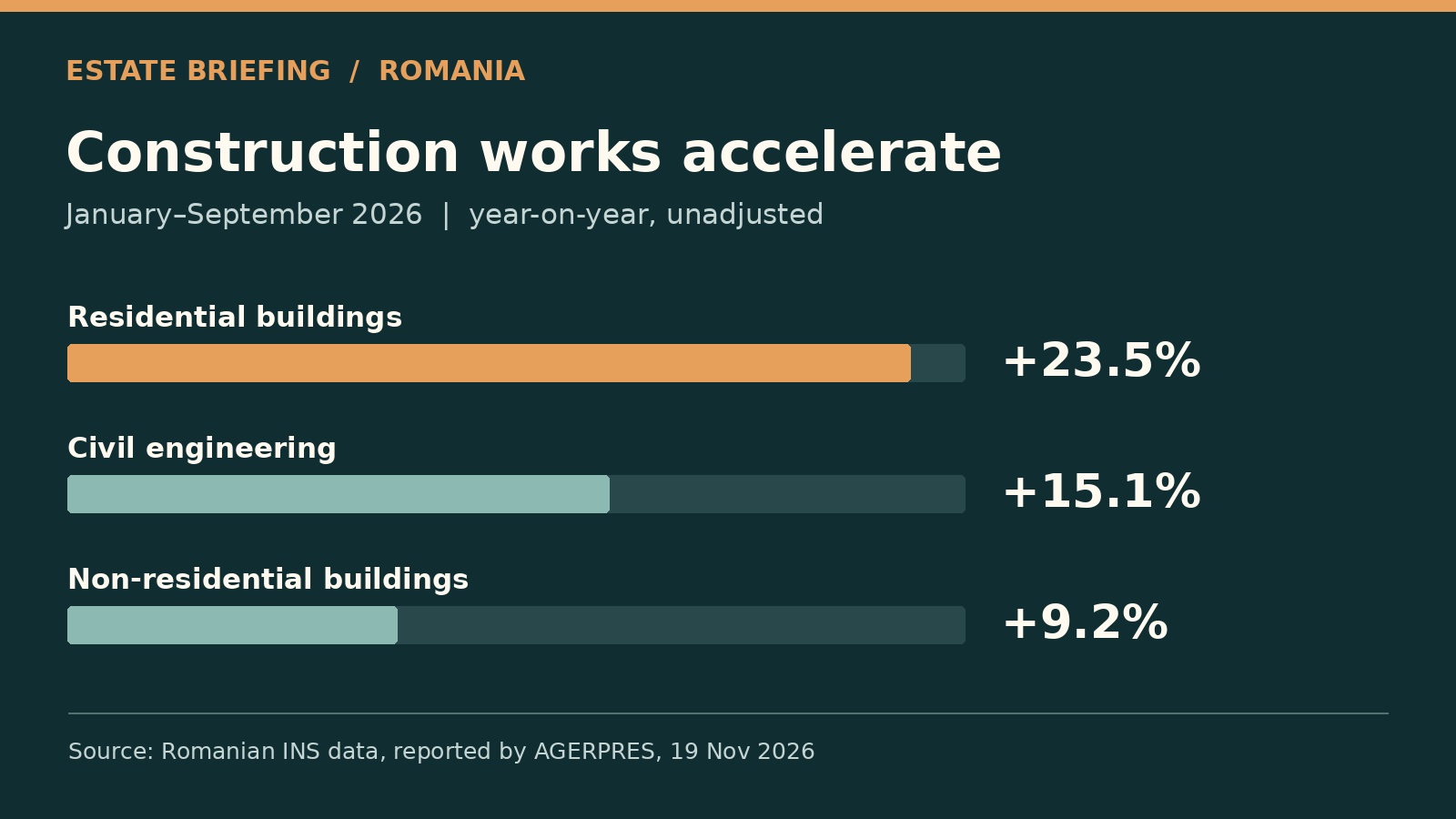 Romania · Romanian residential construction rises 23.5% in nine months
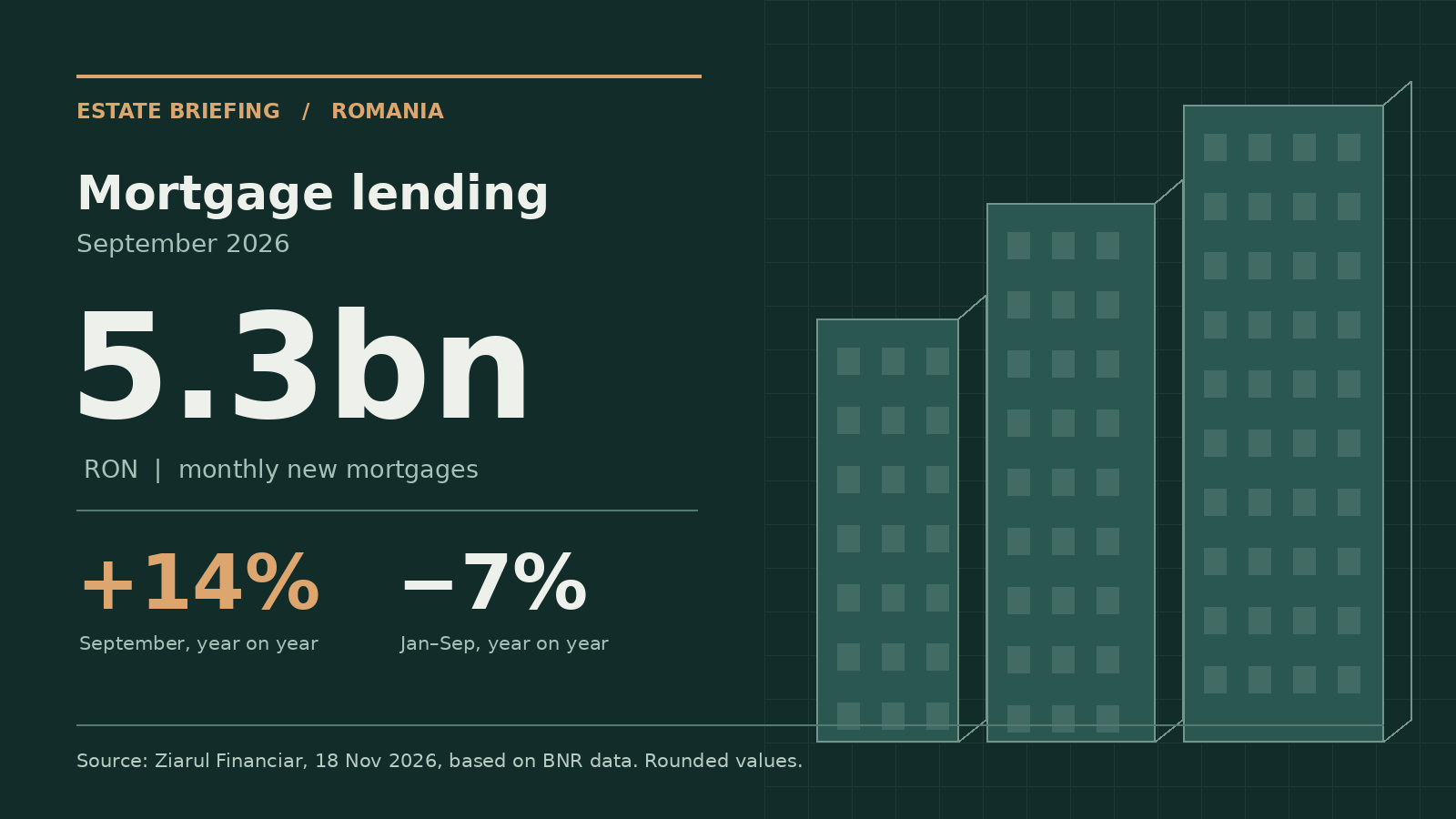 Romania · Romania’s September mortgage lending reaches a record