
Bulgaria’s housing market was sending two different signals in the second quarter of 2026. Municipalities issued permits for 2,216 new residential buildings, 8.2% more than a year earlier, but those permits covered only 11,499 dwellings, a 14.0% annual decline. The National Statistical Institute (NSI) published the figures on 3 August. Counting buildings alone would therefore suggest expansion while counting the apartments planned inside them would suggest a smaller pipeline.

The discrepancy is not a contradiction in the statistics. A permit for one small house and a permit for a large apartment block each add one building to the count, but not the same number of dwellings. NSI also recorded starts of 1,774 residential buildings covering 8,913 dwellings. The number of buildings started rose 8.2% year on year, while the dwellings in them fell 10.5%. Permits indicate authorised intentions; starts measure a later step, and neither is a count of completed or sold homes.
On 23 September, NSI reported that Bulgaria’s transaction-based house price index had risen 15.5% from Q2 2025. Existing dwellings increased 17.6%, faster than the 12.3% increase for newly built dwellings. This index measures prices paid by households for housing transactions; it does not measure developer asking prices or future rents. The simultaneous rise in prices and decline in permitted dwelling numbers cannot establish that one caused the other.
The geography also matters. Q2 permits covered 2,878 planned dwellings in Sofia city, 1,941 in Plovdiv district, 1,660 in Burgas district and 1,316 in Varna district. These are administrative districts, not forecasts for an individual coastal resort or neighbourhood. A buyer comparing Burgas and Varna developments should examine the precise municipality, unit mix, stage of construction and competing completions rather than apply the national price index to a single flat.
For investors, the test is to keep the clocks separate. Rising transaction prices describe deals already completed; permitted dwellings are potential supply that may take years to reach the market or may not be built. Fewer permitted flats do not guarantee scarcity or appreciation. A sound purchase model still needs the actual contract price, delivery date, financing terms, maintenance costs and local rental evidence. The next permit and price releases will show whether this divergence persists.
Sources and limits

National Statistical Institute of Bulgaria — Q2 2026 building permits and construction starts ↗
Official statistics · 2026-08-03
National Statistical Institute of Bulgaria — Q2 2026 national house price index, annual changes ↗
Official statistics · 2026-09-23
National Statistical Institute of Bulgaria — Q2 2026 regional house price index ↗
Official statistics · 2026-09-23
This is research, not investment, tax or legal advice. Definitions and observation dates remain attached to every claim.
 Poland · Poland unveils public housing investment map as ministry reports PLN 7.1bn in support
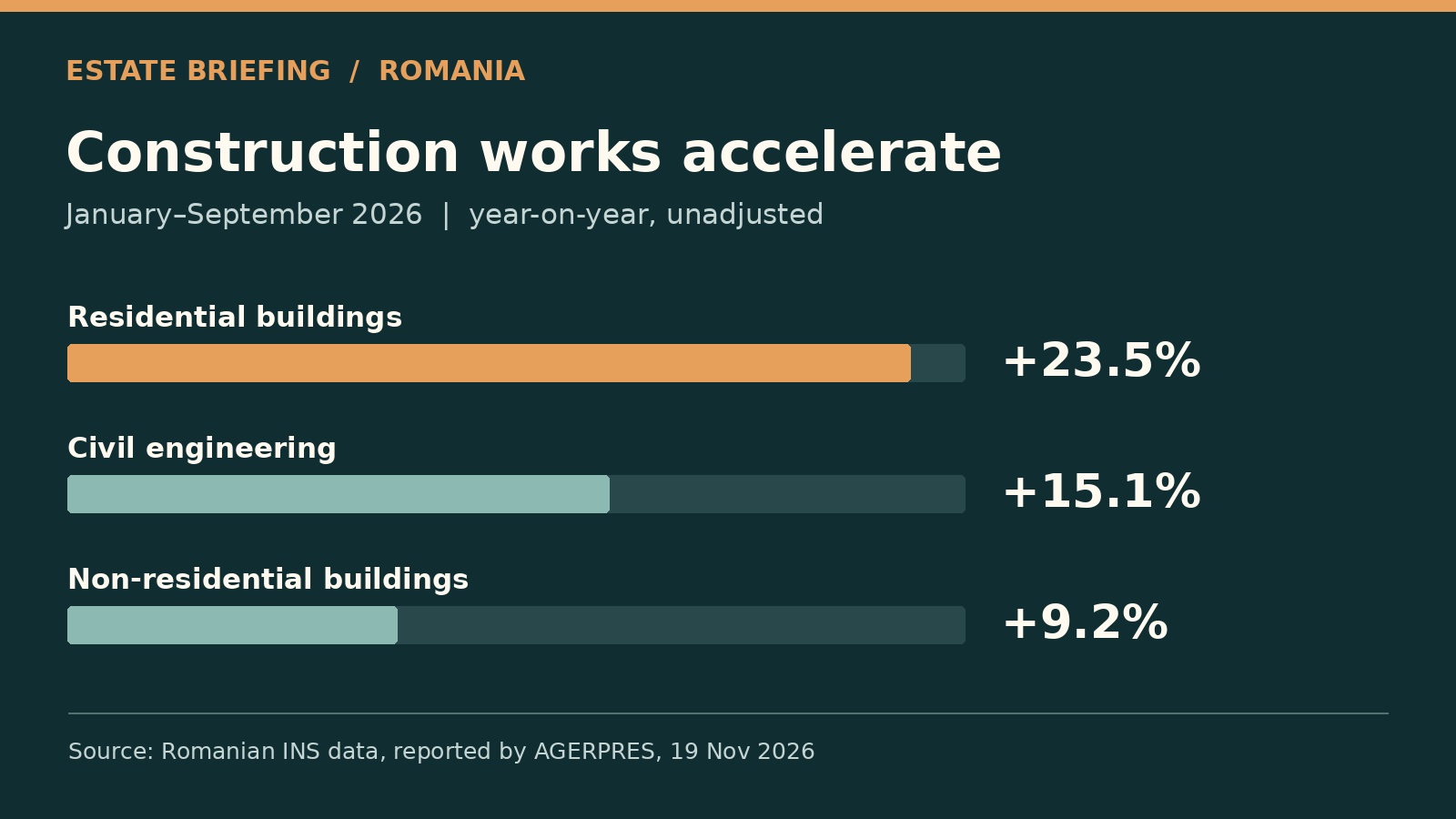 Romania · Romanian residential construction rises 23.5% in nine months
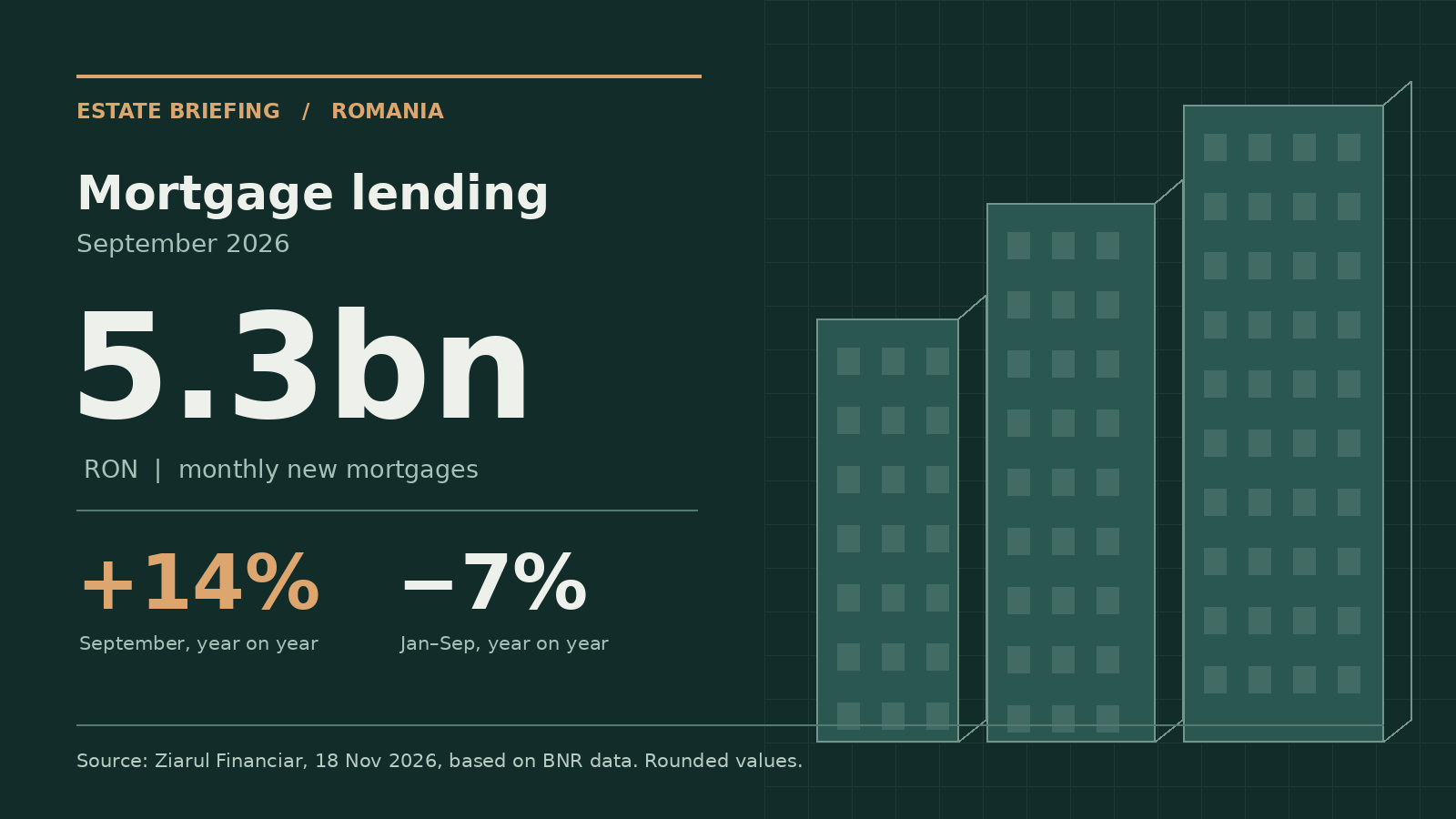 Romania · Romania’s September mortgage lending reaches a record