
Romania recorded the largest decline in the change-based house price-to-income ratio among EU countries over 2015–2025, according to a Eurostat analysis released on 9 November 2026. The measure fell by 42.8% in Romania, compared with a 16.2% decline in Bulgaria and a 6.8% increase for the European Union overall. The national differences are substantial, but they require careful interpretation.
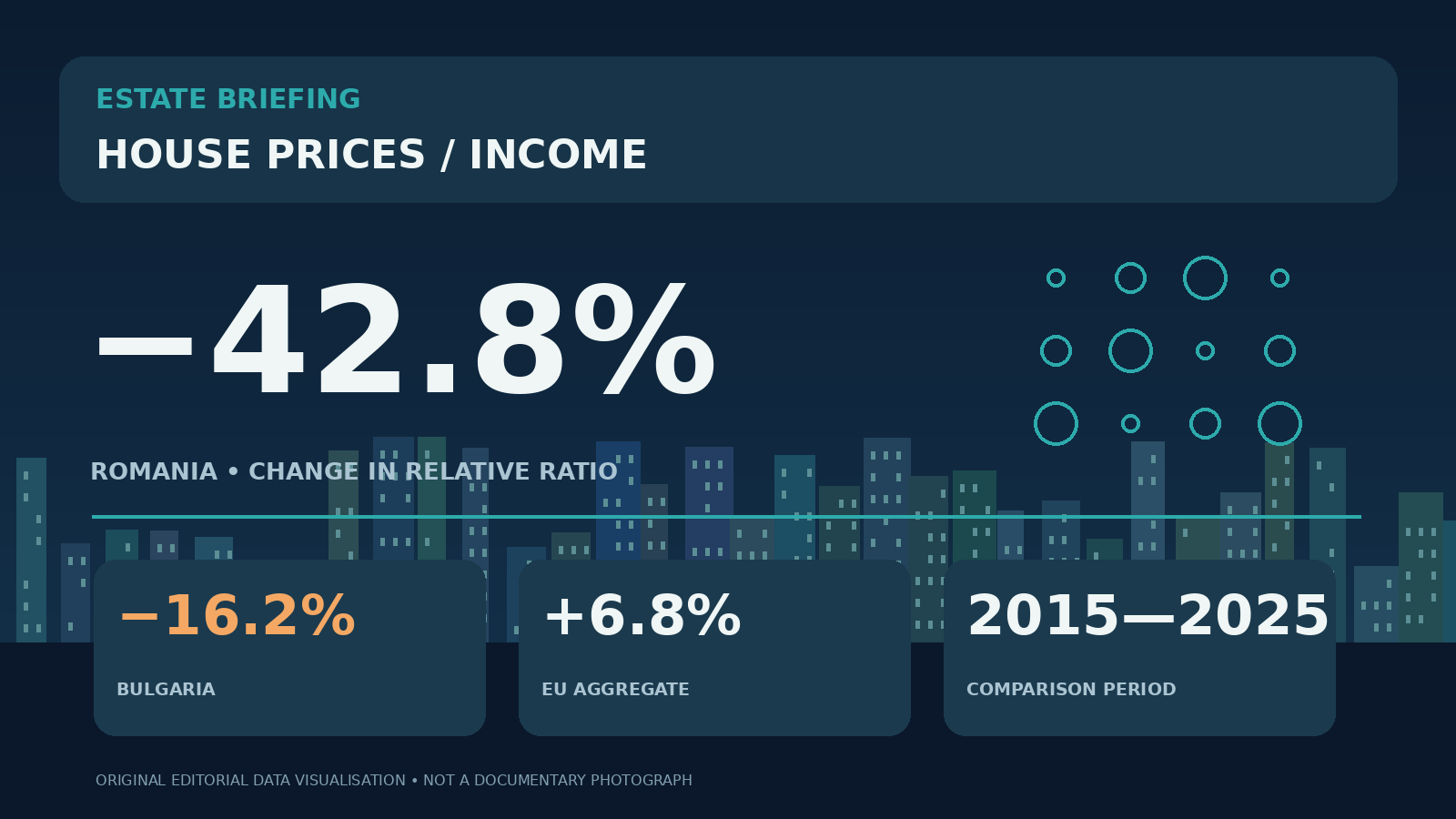
Eurostat constructs the ratio by comparing a house price index with an index of adjusted household gross disposable income per capita. A falling ratio means house prices increased more slowly than incomes, or declined relative to income growth, over the chosen period. It does not mean Romanian housing prices fell by 42.8%, nor does it rank homes by their absolute purchase price or the number of salaries needed to buy one.
Another Eurostat measure compares a standardised price-to-income ratio with its own long-term average. For the EU as a whole this standardised measure stood slightly above that average in 2025. The two indicators answer different questions and should not be mixed. Regional gaps, borrowing costs and housing expenses are not resolved by the headline decade change.
For property buyers, the useful follow-up is to compare actual prices and incomes in the same city, then include mortgage terms and household costs. For investors, national relative affordability is only one part of demand analysis; employment, supply, rents, liquidity and local financing conditions remain essential.
Sources and limits

Eurostat, Are EU house prices outpacing income? ↗
Official EU statistics · 2026-11-09
This is research, not investment, tax or legal advice. Definitions and observation dates remain attached to every claim.
 Greece · Intrum estimate puts nearly 15,000 Greek homes with banks and loan servicers
 Georgia · Bakuriani plans temporary road-surface works before winter season
 Georgia · Ten former Tskaltubo sanatoriums fail to sell at renewed auctions